
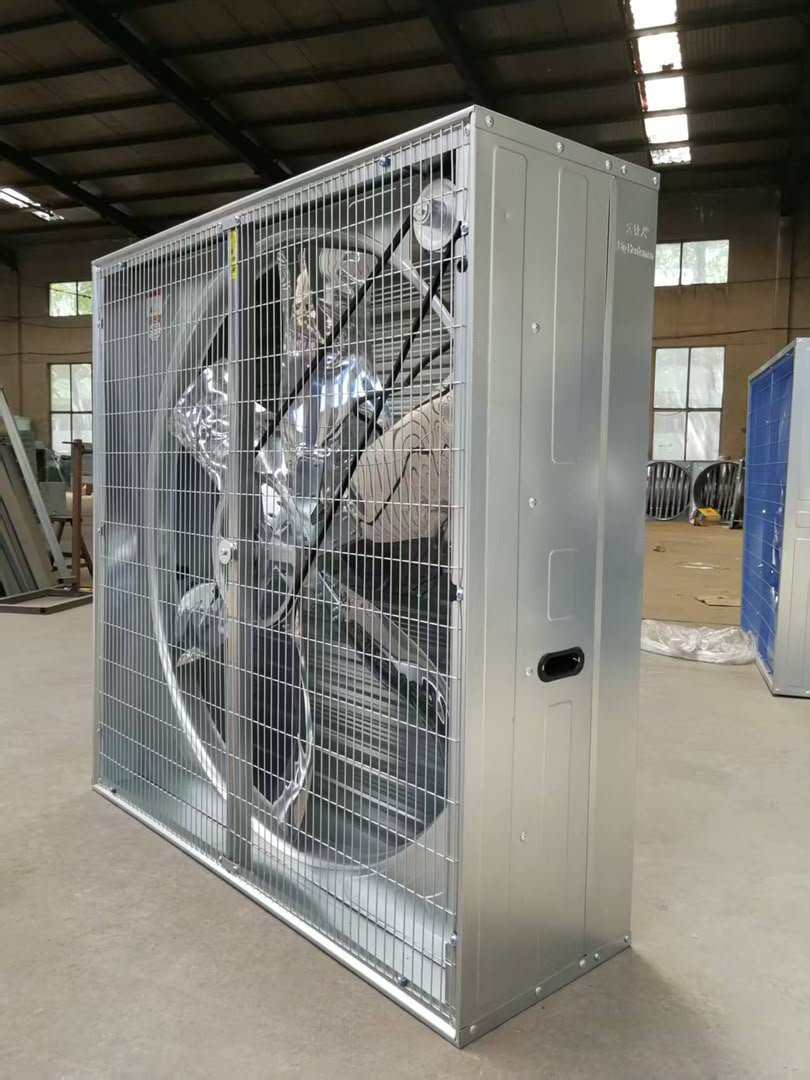
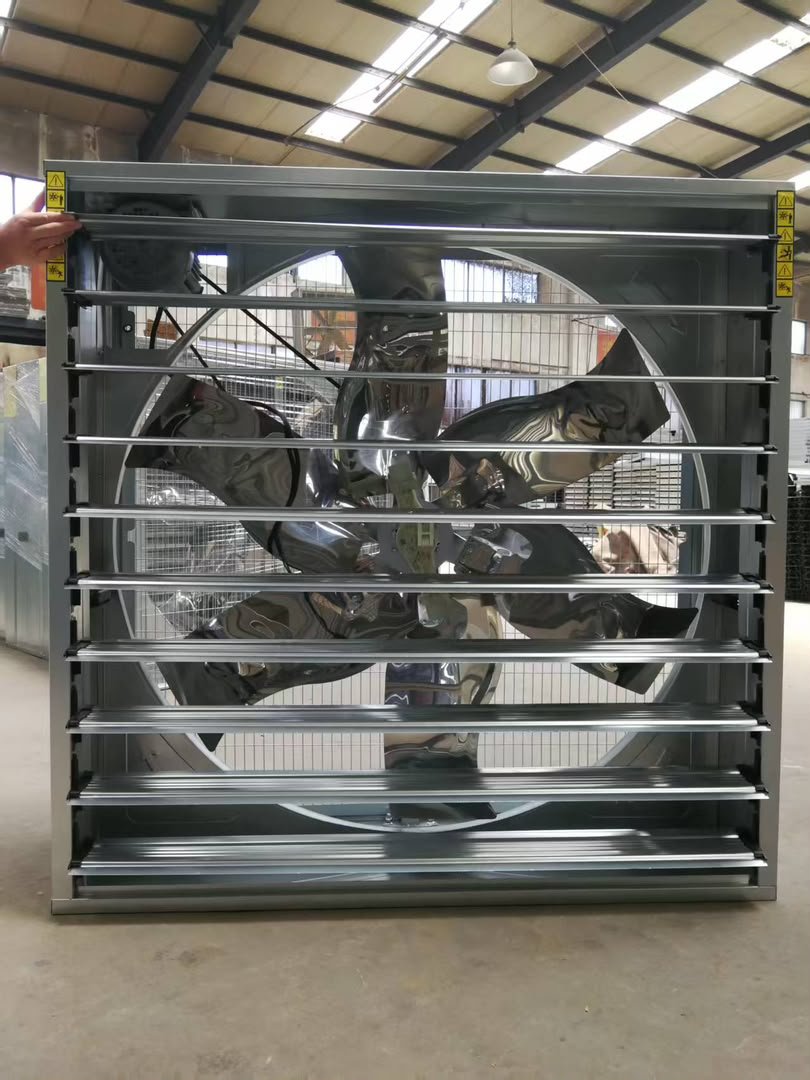


Description
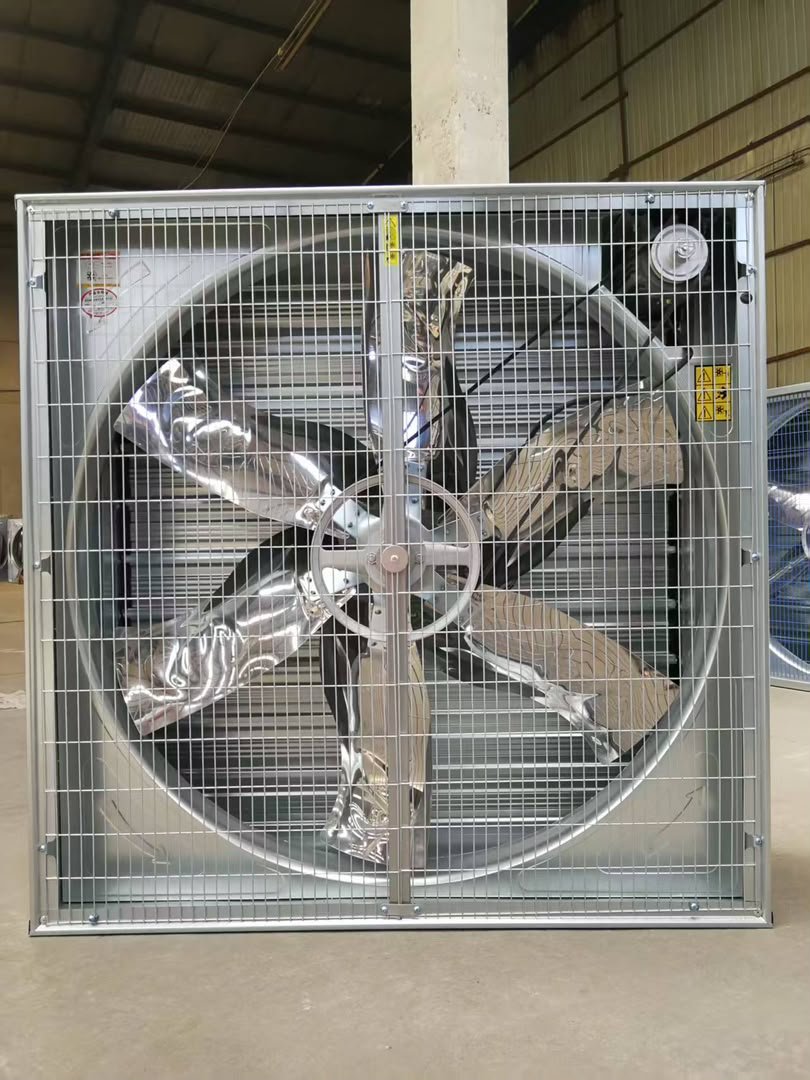
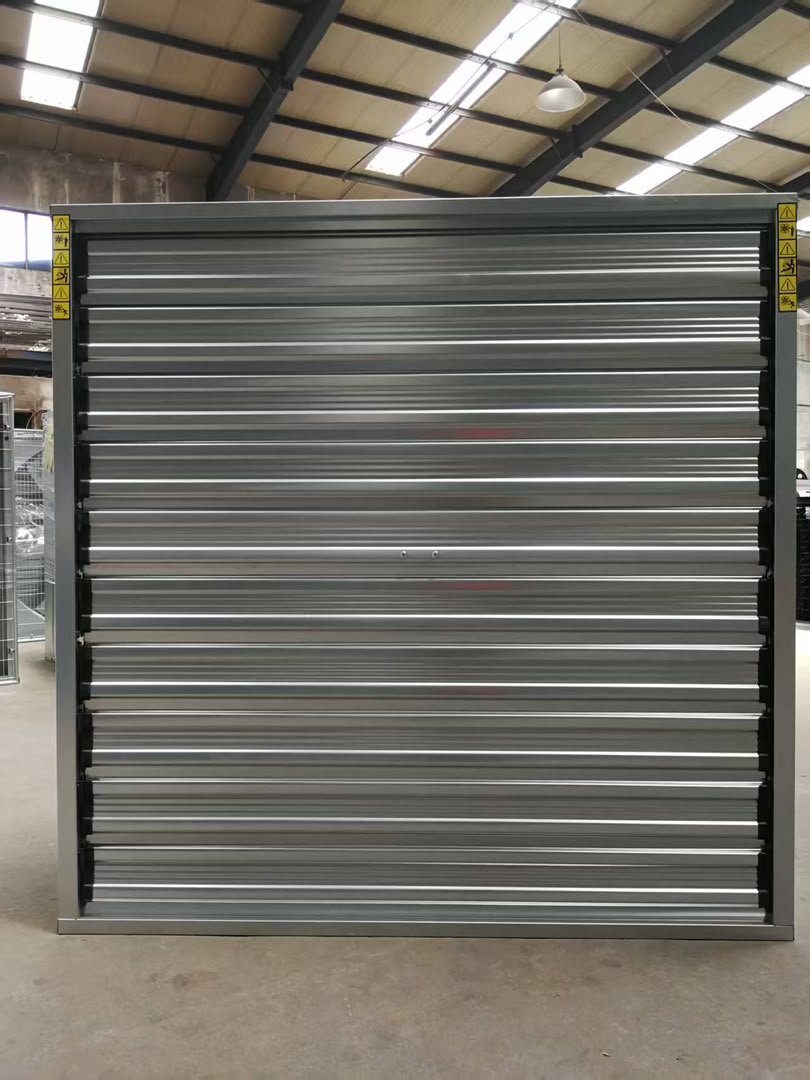
EVO CENTRIFUGAL PUSH-PULL EXHAUST FAN
- The Shutter Opening Mechanism
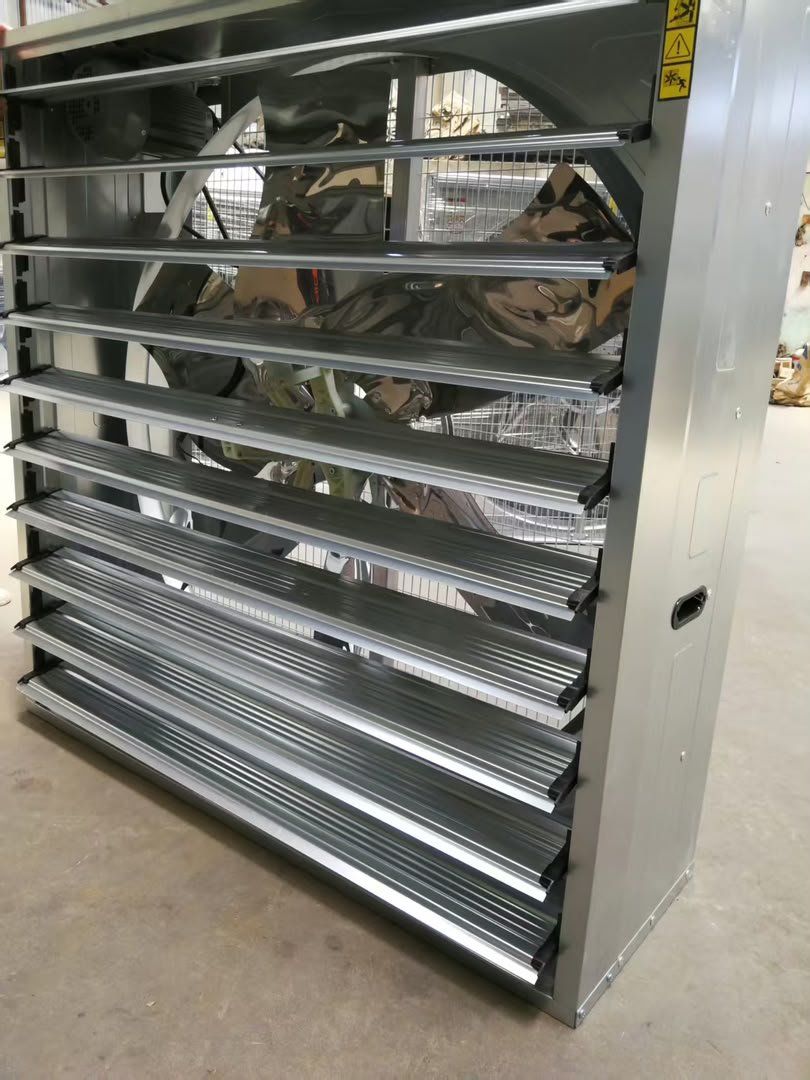
The primary and most defining difference between the two fans lies in how their protective shutters (louvers) open and close.
Push-Pull Exhaust Fan
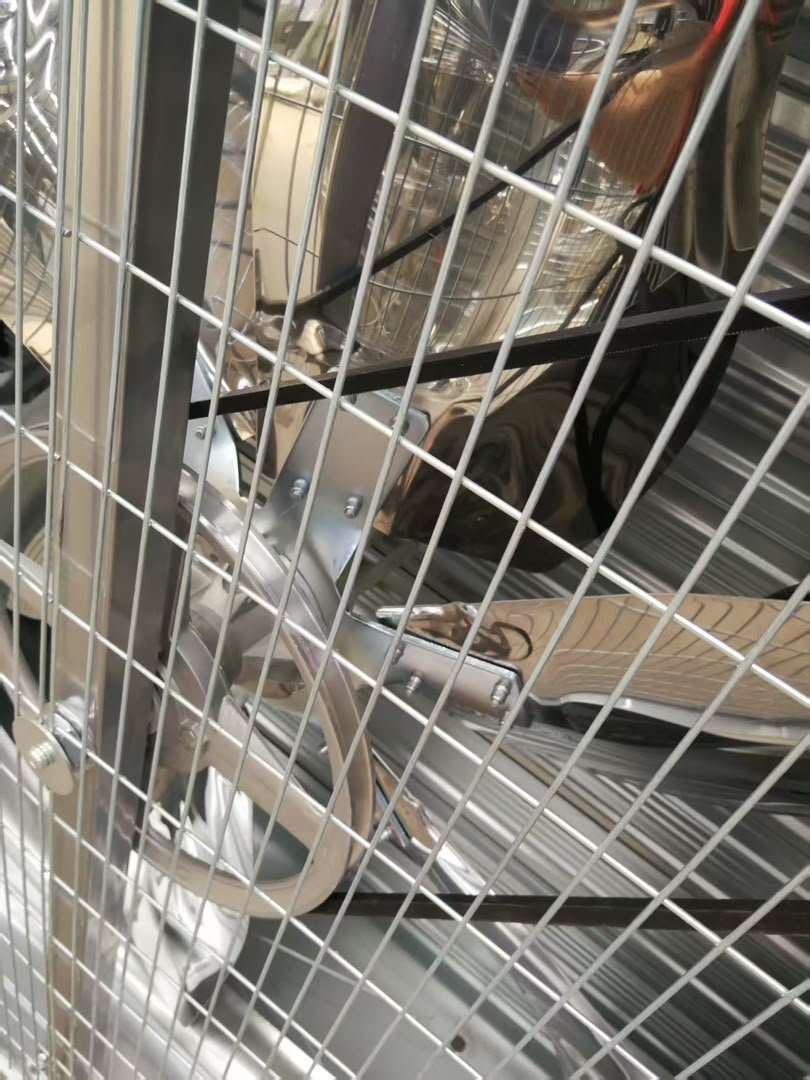
The Push-Pull fan uses a more advanced, centrifugal-based mechanical linkage to operate the shutters.
- Mechanism: It employs a specialized centrifugal “push-pull” device mounted on the fan’s central hub or pulley. As the fan blades spin up to speed, centrifugal weights within this device expand outward. This outward movement pushes a rod or linkage that mechanically forces the shutters fully open.
- Closing: When the fan powers down and the rotational speed drops, springs within the push-pull device retract the weights, pulling the linkage back and closing the shutters.
- Characteristics: This mechanism ensures that the shutters open fully at a specific RPM and remain locked in the open position, minimizing air resistance.
- Airflow and Performance
The difference in the shutter mechanism directly impacts the aerodynamic efficiency and overall air volume (CFM/CMH) the fans can move.
- Push-Pull Fan: The centrifugal push-pull mechanism forces the shutters to open fully (typically a full 90 degrees) and locks them in that position regardless of the airflow pressure. This creates a completely unobstructed path for the air, resulting in less drag and a larger air volumecompared to a Hummer fan of the exact same specifications.
- Durability and Maintenance
Both fans are designed for harsh environments, but their mechanisms wear differently.
- Hummer Fan: The hammer mechanism is robust and simple. However, the constant swinging and dropping of the heavy weight can cause wear on the linkage pins and joints over time. The shutters might also flutter if the airflow is inconsistent
Summary Comparison Table
| Feature | Hummer (Hammer) Fan | Push-Pull Fan |
| Shutter Mechanism | Gravity/Airflow driven heavy weight | Centrifugal mechanical linkage |
| Shutter Opening Angle | May vary, often less than 90° | Fully open (90°) and locked |
| Air Volume (Same Motor) | Standard | Larger (due to less air resistance) 20-30% higher |
| Airflow Efficiency | Good | Excellent |
| Shutter Flutter | Possible in strong winds | Minimal to none |
| Initial Cost | Lower (More economical) | Higher |
| Best For | Budget-conscious projects, standard ventilation | High-efficiency needs, maximum airflow requirements |
| installation | easy | easy |
Performance Specifications
| Model | Drive | Blade Diameter (mm) | Blade Rotational Speed (rpm) | Motor Rotational Speed (rpm) | Air Flow (m³/h) | Total Pressure (Pa) | Noise dB | Input Power (W) | Power Parameter | Height (mm) | Width (mm) | Thickness (mm) |
|---|---|---|---|---|---|---|---|---|---|---|---|---|
| EVO-1530 (55″) | Belt | 1400 | 425 | 1400 | 55000 | 60 | ≤59 | 1500 | 380V/50Hz | 1530 | 1530 | 450 |
| EVO-1380 (50″) | Belt | 1270 | 458 | 1400 | 46000 | 57 | ≤60 | 1100 | 380V/50Hz | 1380 | 1380 | 450 |
| EVO-1220 (43″) | Belt | 1100 | 458 | 1400 | 41000 | 57 | ≤62 | 1100 | 380V/50Hz | 1220 | 1220 | 450 |
| EVO-1100 (40″) | Belt | 1000 | 470 | 1400 | 35000 | 70 | ≤64 | 750 | 380V/50Hz | 1100 | 1100 | 450 |
| EVO-1000 (36″) | Belt | 910 | 470 | 1400 | 30000 | 70 | ≤64 | 750 | 380V/50Hz | 1000 | 1000 | 450 |
| EVO-900 (30″) | Belt | 750 | 560 | 1400 | 22000 | 73 | ≤70 | 550 | 380V/50Hz | 900 | 900 | 450 |
Reviews
There are no reviews yet.